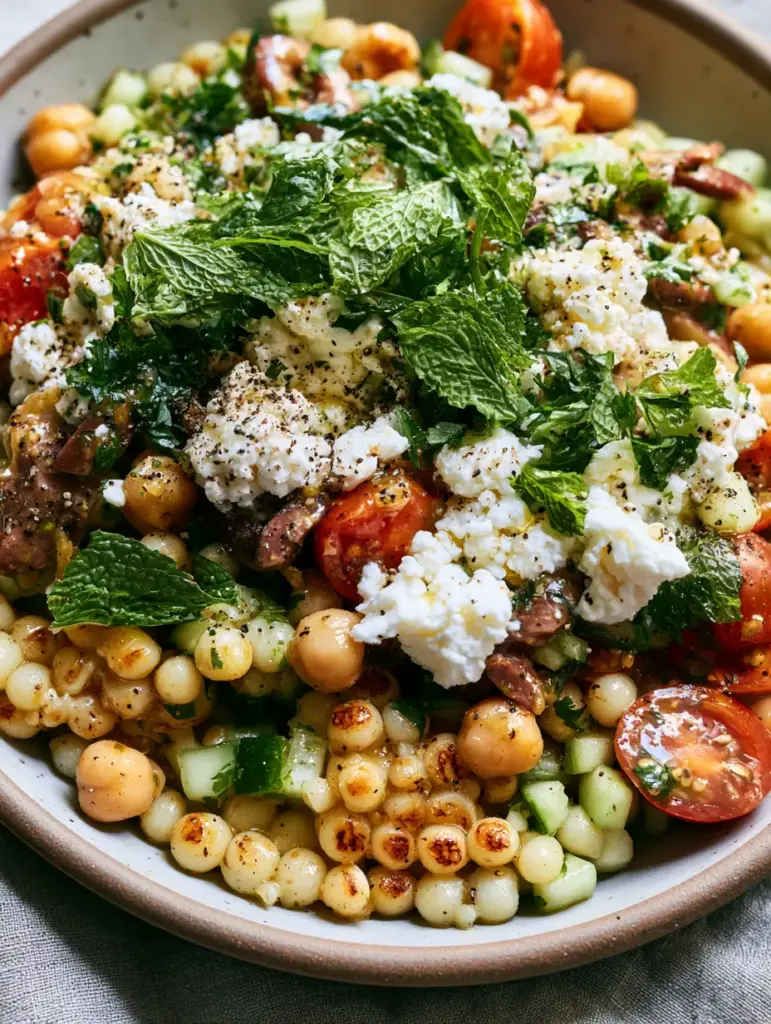
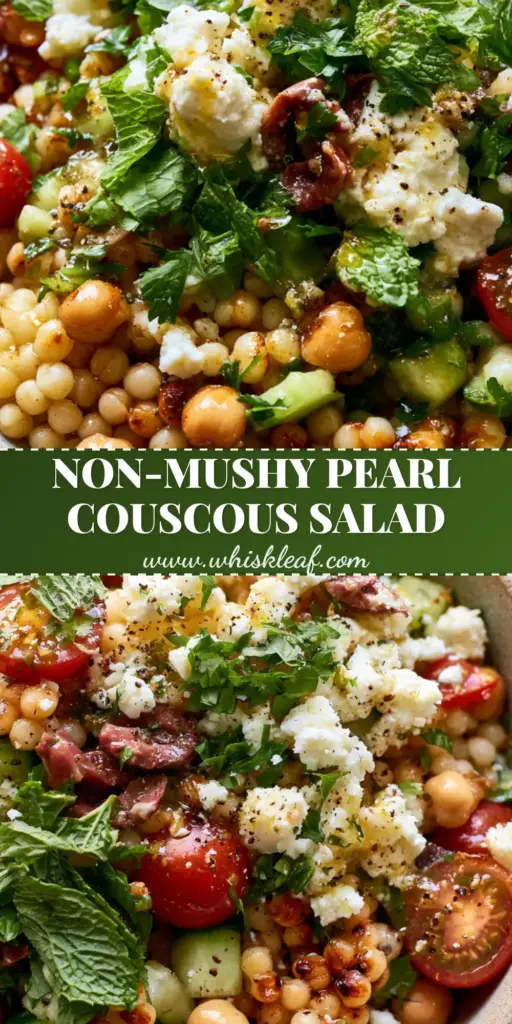
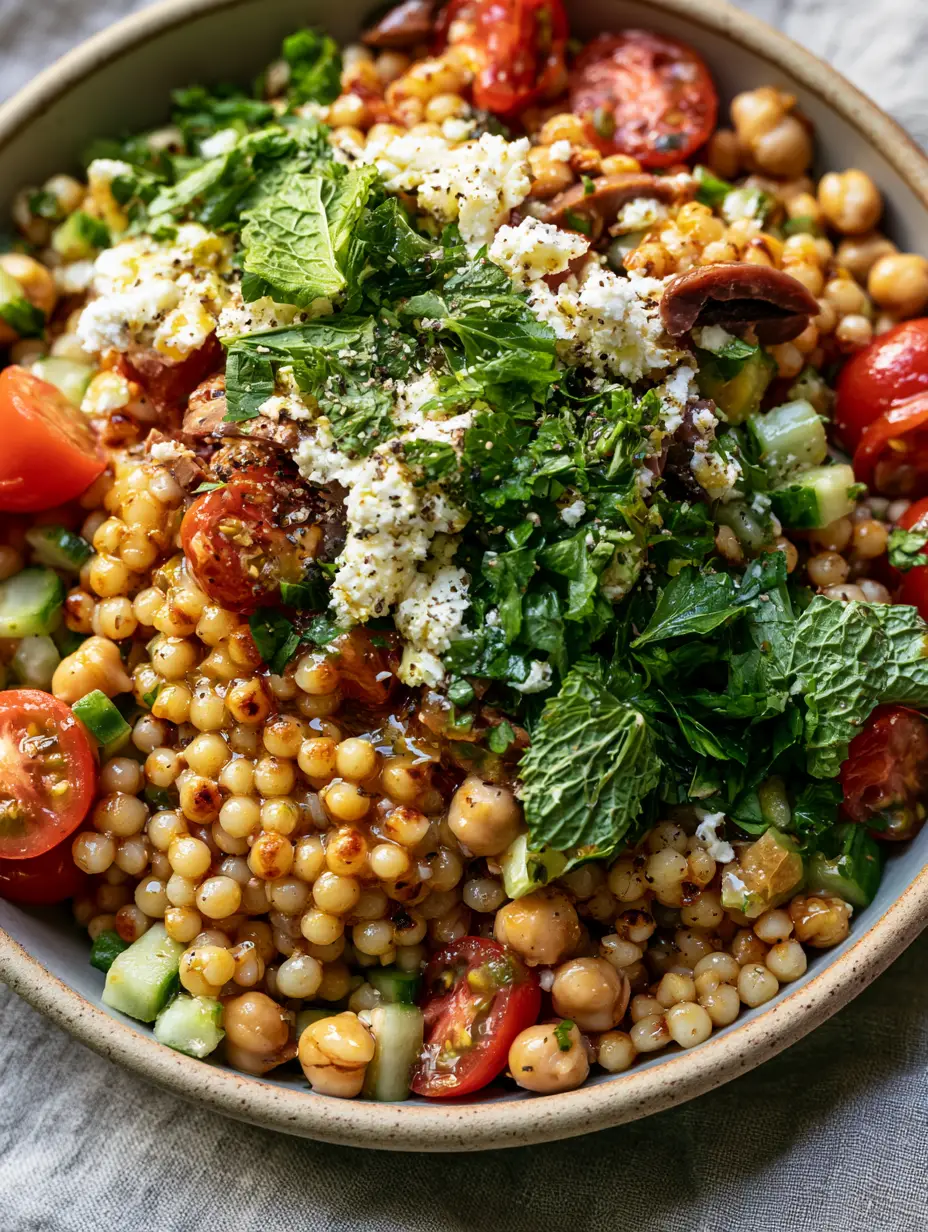
There is something inherently sophisticated about a perfectly composed couscous salad, especially when it is served in a rustic matte stoneware bowl under the soft, diffused light of a lazy morning. This isn’t your standard, grainy deli-counter side dish; it is a masterclass in texture and vibrant Mediterranean flavor.
Every forkful offers a symphony of sensations, from the individually distinct, toasted golden-brown edges of the pearl couscous to the snap of paper-thin red onions and the creamy crumble of high-quality feta cheese. The secret lies in the glossy, zesty lemon-herb vinaigrette that creates a glistening sheen over every ingredient, ensuring no bite is ever dry or dull.
If you have been searching for a meal-prep hero or a show-stopping side for your next gathering, this Mediterranean-inspired creation is the answer. Inspired by the bright profiles of a mediterranean pearl couscous salad, this recipe elevates simple pantry staples into a gourmet experience through precise culinary techniques.
Why This Vibrant Mediterranean Dish Outshines the Rest
- The Maillard Advantage: By toasting the pearl couscous before simmering, we unlock a nutty, complex aroma and a visual “golden-brown” edge that provides a structural bite.
- Textural Contrast: We balance plump, protein-rich chickpeas with the cooling crunch of finely diced English cucumbers and the juicy burst of halved heirloom cherry tomatoes.
- Herbaceous Depth: Generous amounts of hand-torn fresh mint and chopped flat-leaf parsley provide an aromatic freshness that cuts through the richness of the Kalamata olives and feta.
- Glossy Emulsification: Our vinaigrette isn’t just oil and vinegar; it is a thick, zesty dressing designed to coat the grains perfectly, as seen in the most appetizing culinary photography.
The Anatomy of an Elite Couscous Salad
To achieve the result depicted in our visual blueprint, every ingredient must be selected for its specific contribution to the dish’s architecture. We are building layers of flavor that range from acidic and salty to earthy and sweet.
Toasted Pearl Couscous: Unlike Moroccan couscous, pearl (or Israeli) couscous is toasted pasta. We use 1.5 cups (250g) of dry grains, toasting them in 1 tbsp (15ml) of extra virgin olive oil until they are fragrant and bronzed.
Plump Canned Chickpeas: One 15oz (425g) can provides the protein-rich foundation. Ensure they are rinsed thoroughly and patted dry to prevent the salad from becoming mushy.
English Cucumbers: These are essential for their thin skin and lack of large seeds. We dice 1 large (300g) cucumber into uniform cubes to ensure even distribution in every spoonful.
Heirloom Cherry Tomatoes: A pint (280g) of these halved beauties adds visual interest and a varied sweetness. Their juice mingles with the dressing to create a natural sauce.
Crumbled Feta Cheese: Use 1/2 cup (75g) of high-quality sheep’s milk feta. The creamy, white crumbles provide a sharp, salty contrast to the earthy grains.
Kalamata Olives: 1/3 cup (50g) of slivered olives adds a deep, briny note. Their dark purple hue pops beautifully against the light-colored grains.
Paper-Thin Red Onion: Using a mandoline or a very sharp knife, slice 1/4 of a medium onion (40g) into translucent slivers. This provides a sharp bite without overpowering the other delicate flavors.
Fresh Herbs: 1/4 cup (10g) each of mint and parsley are non-negotiable. Hand-tearing the mint prevents the leaves from bruising and turning black, preserving that bright green “social media” look.
Glossy Lemon-Herb Vinaigrette: This foundational element requires 1/4 cup (60ml) olive oil, the juice of 1 large lemon (approx. 45ml), 1 tsp (5g) Dijon mustard for emulsification, and 1 clove of minced garlic.
Foundational Seasoning: Never forget the 1/2 tsp (3g) of cracked black pepper and a generous pinch of flaky sea salt to brighten all the constituent flavors.
Essential Tools for Culinary Success
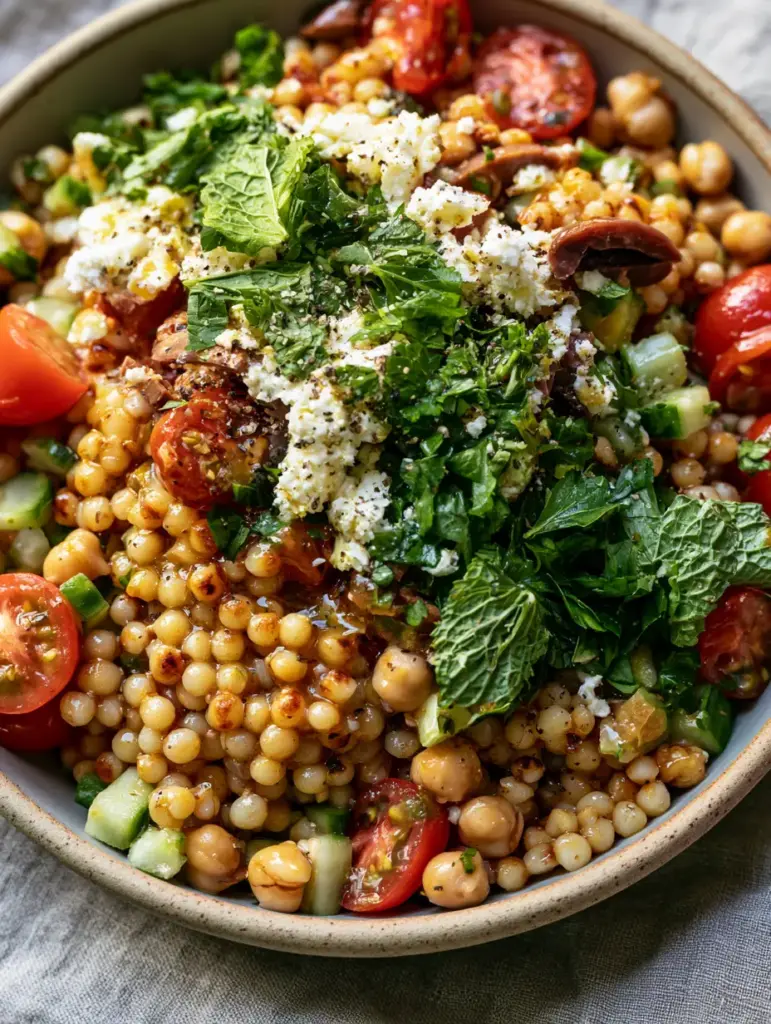
Achieving the professional aesthetic of a couscous salad requires more than just a bowl. A heavy-bottomed skillet or saucepan is vital for the toasting phase to prevent the grains from burning.
A fine-mesh sieve is necessary for rinsing the chickpeas and draining the couscous if any excess liquid remains. For the vegetables, a sharp chef’s knife is your best friend for achieving that “finely diced” precision that makes the salad look like it came from a high-end bistro.
Finally, a glass jar with a tight-fitting lid is the secret to a perfectly emulsified vinaigrette. Shaking the dressing vigorously ensures the oil and lemon juice bond into that “glossy sheen” described in our visual prompt.
Step-by-Step Mastery of the Pearl Couscous Salad
1. Achieving the Perfect Golden-Brown Toast
Heat 1 tbsp (15ml) of olive oil in a large saucepan over medium heat. Add your dry pearl couscous and stir constantly for 3-5 minutes. Look for the visual cue: the grains should transition from a pale cream to a toasted golden-brown, smelling slightly nutty. This step is critical for a couscous salad that maintains its structural integrity.
2. The Precise Simmer
Add 1.75 cups (420ml) of water or vegetable broth and a pinch of salt to the toasted grains. Bring to a boil, then immediately reduce to a low simmer and cover. Cook for 8-10 minutes. The sensory cue here is “al dente”—the grains should be tender but still have a distinct, individual bounce when pressed.
3. Cooling and Fluffing
Transfer the cooked grains to a large rimmed baking sheet and spread them out. This stops the cooking process and prevents the grains from clumping together. Drizzle with a teaspoon of oil and fluff with a fork while they are still warm to ensure each grain remains distinct.
4. Prepping the Mediterranean Bounty
While the grains cool, prepare your produce. Slice the heirloom cherry tomatoes in half and dice the English cucumbers into 1/4-inch pieces. For the red onion, aim for paper-thin slivers that will wilt slightly once dressed. Combine these in your rustic stoneware bowl with the rinsed chickpeas and slivered Kalamata olives.
5. Emulsifying the Glossy Vinaigrette
In your jar, combine the lemon juice, olive oil, Dijon, garlic, and a pinch of dried oregano. Shake until the mixture is thick and opaque. This emulsion is what provides the “glistening sheen” that makes this couscous salad so visually appealing.
6. The Final Assembly and Garnish
Add the cooled couscous to the vegetable bowl. Pour the vinaigrette over the top and toss gently to coat every grain. Fold in the crumbled feta and the hand-torn mint and parsley. Finish with a heavy sprinkle of freshly cracked black pepper just before serving.
Expert Tips for a Professional Finish
- Rinse Your Grains: If you find your couscous is too starchy, a quick rinse under cold water after cooking (but before dressing) can help achieve that “individually distinct” grain look.
- Season in Layers: Salt the water when boiling the couscous, salt the vegetables slightly before adding the grains, and season the dressing. This creates a multi-dimensional flavor profile.
- Temperature Matters: Never add the feta cheese to hot couscous, or it will melt and create a cloudy appearance. Ensure the grains are at room temperature.
- Herb Preservation: Add the fresh mint at the absolute last second. Mint oxidizes quickly; adding it just before the “top-down photo” ensures it remains vibrant green.
Smart Storage and Meal Prep Longevity
This couscous salad is a rare gem that actually tastes better the next day. The grains continue to absorb the lemon-herb vinaigrette, deepening the flavor profile without losing their texture.
Store leftovers in an airtight container in the refrigerator for up to 4 days. If the salad seems a little dry after refrigeration, simply add a small squeeze of fresh lemon juice or a teaspoon of olive oil to restore that glossy sheen.
We do not recommend freezing this salad, as the cucumbers and tomatoes will lose their structural integrity and become watery upon thawing. For the best experience, enjoy it chilled or at room temperature.
Perfect Pairings for Your Salad
This versatile dish stands alone as a light lunch, but it also shines as part of a larger Mediterranean spread. It pairs beautifully with a protein-heavy grilled chicken orzo salad or even a classic 3-bean salad for a vegetarian feast.
If you are serving this at a summer gathering, consider a refreshing cucumber and tomato salad on the side to double down on the fresh produce. For a more indulgent lunch, it serves as a wonderful palate cleanser alongside a hearty grinder salad or a spicy italian grinder tortellini salad.
Frequently Asked Questions
While you can, the texture will be significantly different. Pearl couscous is larger and provides a chewy, pasta-like bite that is essential for the structure of this specific salad.
The keys are toasting the grains in oil first to coat them and then spreading the cooked grains on a flat baking sheet to cool quickly rather than leaving them in a hot pot.
This salad holds up exceptionally well and can be stored in an airtight container for up to 4 days, making it an ideal choice for healthy meal prep.
No, pearl couscous is made from wheat flour. To make this gluten-free, you can substitute the couscous with quinoa or sorghum, though the cooking times will vary.
Cutting mint with a knife can often bruise the delicate leaves, causing them to turn black. Hand-tearing preserves the cell structure and keeps the herbs looking vibrant green for longer.
The Ultimate Mediterranean Toasted Pearl Couscous Salad
Couscous Salad with Toasted Pearl Grains and Zesty Lemon-Herb Vinaigrette
Ingredients
Equipment
Method
- Heat 1 tbsp olive oil in a saucepan. Add pearl couscous and stir for 3-5 minutes until the edges are golden-brown and nutty.
- Add water/broth and salt. Boil, then simmer covered for 8-10 minutes until liquid is absorbed.
- Spread couscous on a baking sheet to cool and fluff with a fork to keep grains distinct.
- Dice cucumber, halve tomatoes, and slice onion paper-thin. Combine in a large bowl with chickpeas and olives.
- In a glass jar, combine dressing ingredients and shake vigorously until glossy and emulsified.
- Combine cooled grains with vegetables. Pour dressing over, add feta and herbs, and toss gently. Garnish with cracked black pepper.
Notes
Hand-tear the mint at the last second to prevent bruising.
Closing and Call to Action
Creating the perfect couscous salad is an exercise in balancing simple, high-quality ingredients with focused technique. From the toasted grains to the paper-thin onions, every detail matters in achieving that restaurant-quality result in your own kitchen.
If you enjoyed this recipe, please leave a comment below and let us know how your toasted grains turned out! Don’t forget to sign up for our newsletter for more culinary deep-dives. You can also save this recipe to your boards by following us on Pinterest.