There is a specific moment in spring when the produce aisle transforms into a vibrant sea of emerald green, and nothing captures that seasonal shift better than this orzo with asparagus and peas. This dish isn’t just a simple pasta side; it is a masterclass in texture, blending the velvety, starch-rich consistency of a risotto with the brightness of a citrus grove.
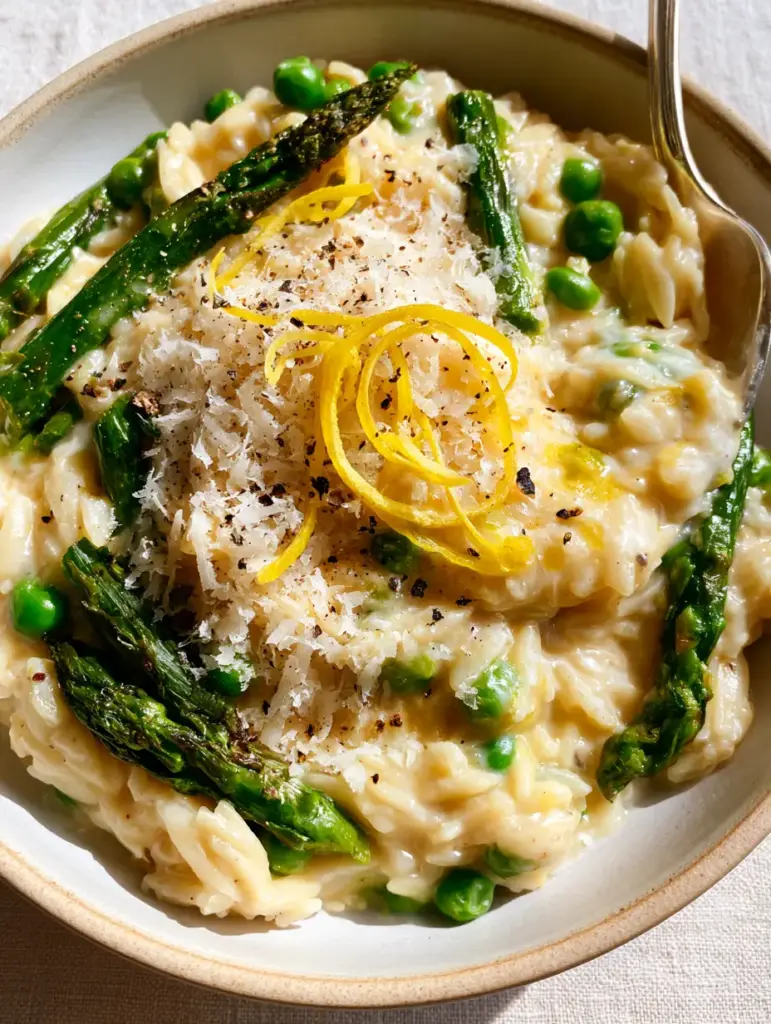
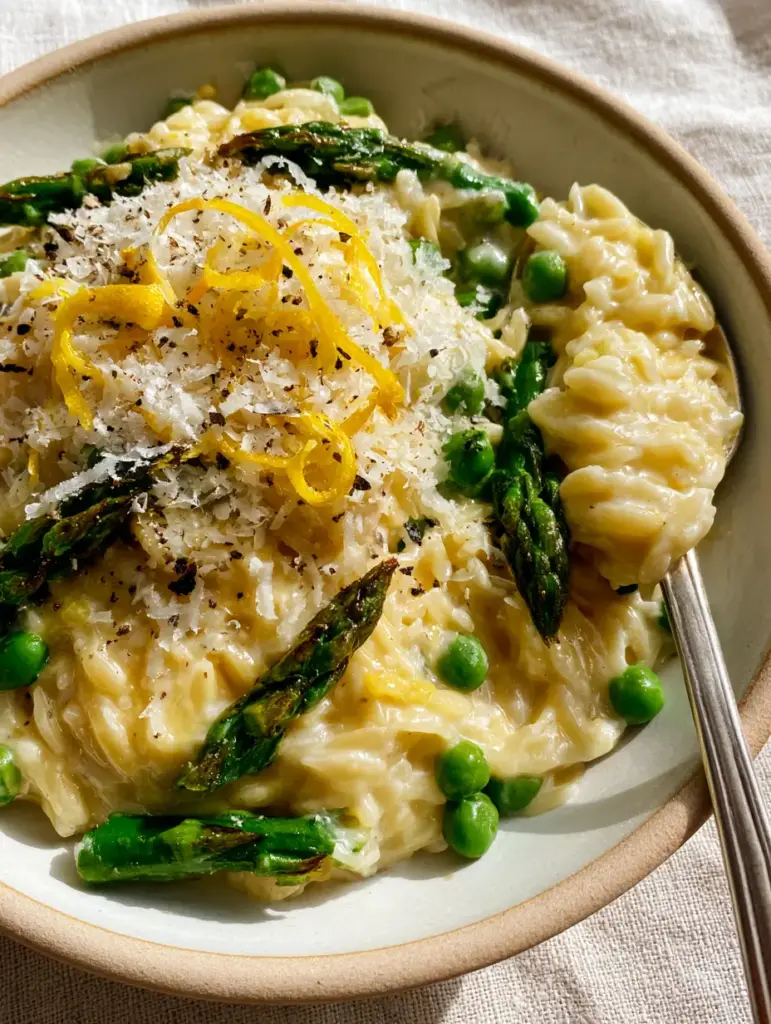
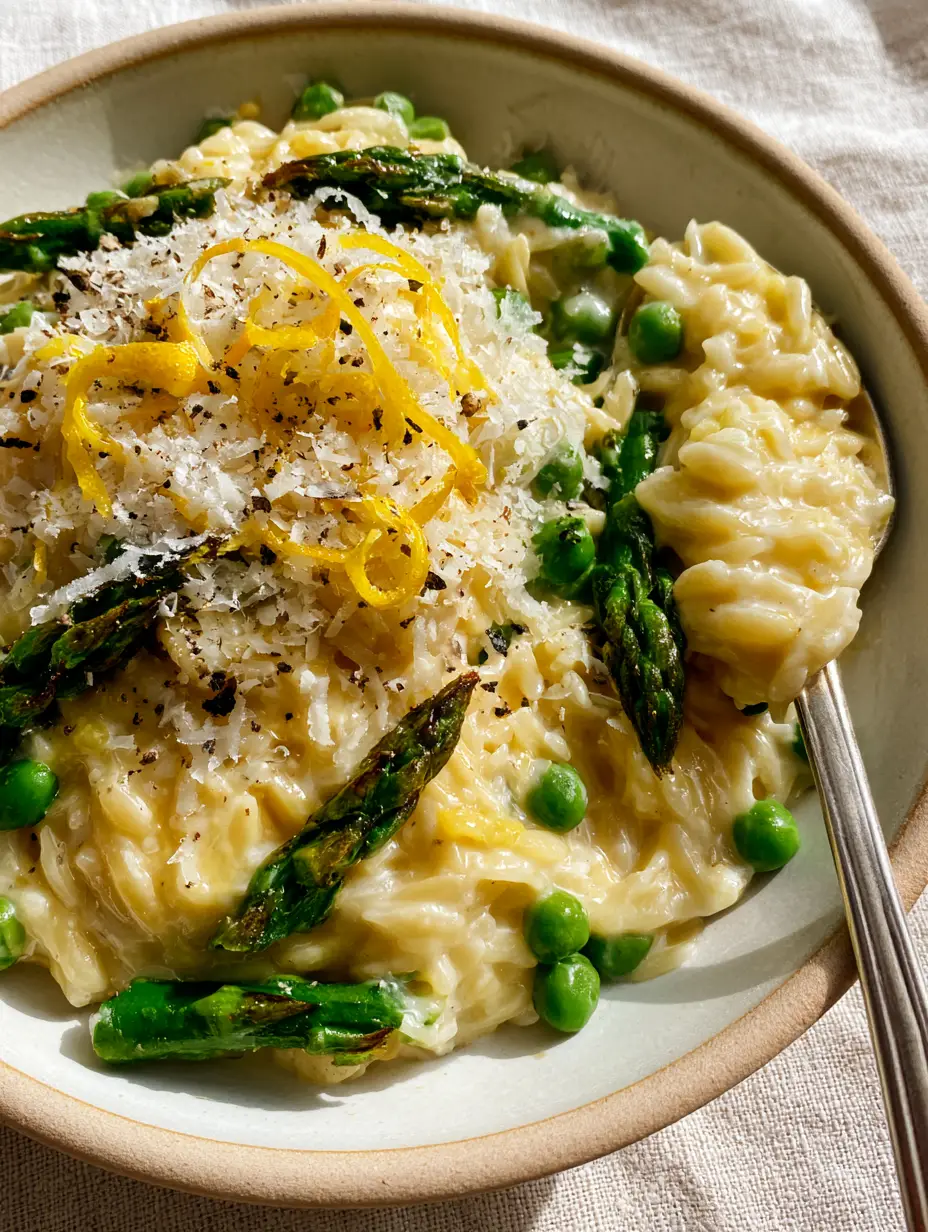
The visual appeal of this recipe lies in the contrast between the glossy, buttery sauce and the rustic, charred edges of the asparagus tips. When you pull a spoon through the bowl, you should see a thick, emulsified “pull” that coats every grain of al dente orzo in a luxurious lemon-butter glaze.
Whether you are hosting a breezy weekend brunch or looking for a sophisticated weeknight dinner, this recipe delivers professional-grade results with a minimalist aesthetic. Let’s dive into the culinary science of creating the perfect spring bowl.
Why This Creamy Lemon Orzo Defines Spring Dining
- The Velvety Starch Sauce: Unlike heavy cream-based sauces, this texture is achieved through the scientific release of starches from the orzo, emulsified with cold butter and lemon.
- Charred vs. Blanched Textures: By searing the asparagus tips, we introduce a smoky depth that perfectly offsets the sweet, popping crunch of blanched peas.
- Micro-Planed Precision: Using a micro-plane for the Parmesan creates a “snowfall” effect that melts instantly into the sauce, adding umami without clumping.
- High-Contrast Visuals: The vibrant emerald vegetables against the pale, golden orzo make this a centerpiece-worthy dish for any table.
The Spring Garden Pantry: Essential Ingredients
To achieve the specific visual and flavor profile of our orzo with asparagus and peas, every ingredient serves a dual purpose: structural integrity and sensory impact.
Orzo Pasta: Use 1.5 cups (300g) of high-quality durum wheat orzo. Its high starch content is the engine behind our glossy, velvety sauce.
Fresh Asparagus: You will need 1 lb (450g) of thin-to-medium spears. We will focus on the tips for that iconic charred look while slicing the stalks thinly to meld with the pasta.
Sweet Peas: 1 cup (150g) of fresh or frozen petite peas provides a pop of sweetness. If using fresh, a quick blanch is all they need to retain their “plump” appearance.
Unsalted Butter: 4 tbsp (56g) of high-fat European-style butter is essential. This is the “invisible” foundational ingredient that creates the “buttery and rich” look from our visual blueprint.
Vegetable or Chicken Stock: 3.5 cups (840ml) of low-sodium stock. This acts as the cooking medium, slowly being absorbed to concentrate the flavors.
Lemon Duo: You will need 1 large organic lemon. We use the juice for acidity and the zest—carefully peeled into long curls—for the essential aromatic garnish.
Parmesan Cheese: 1/2 cup (45g) of Parmigiano-Reggiano. Micro-planing is non-negotiable here to achieve the light, airy texture seen in the professional photography.
Foundational Seasonings: Fine sea salt, 1 tsp (5g) cracked black pepper, and 2 tbsp (30ml) extra virgin olive oil for searing the asparagus tips.
Professional Tools for a Flawless Finish
To replicate the “minimalist aesthetic” and “highly detailed food textures” of our visual prompt, specific tools are required. A wide, shallow ceramic bowl is best for presentation, as it allows the sauce to pool slightly around the edges.
A heavy-bottomed stainless steel skillet or Dutch oven is necessary for even heat distribution, ensuring the orzo doesn’t stick while the starch develops. You will also need a micro-plane grater for the cheese and a sharp vegetable peeler to create those signature lemon zest curls.
Mastering the Technique: Step-by-Step Instructions
1. Searing the Asparagus for Maximum Visual Impact
Heat 1 tbsp (15ml) of olive oil in your skillet over medium-high heat. Add the asparagus tips and a pinch of salt, searing for 3-4 minutes until they are “slightly charred” but still “bright emerald green.” Remove them from the pan and set aside; this preserves their texture so they don’t become mushy during the pasta boil.
2. Toasting the Orzo and Building the Base
In the same pan, melt 1 tbsp (14g) of butter. Add the remaining sliced asparagus stalks and the orzo, stirring for 2 minutes. You are looking for a faint nutty aroma and a slight translucency at the edges of the pasta grains, which prevents the orzo from becoming a “mushy” mass later.
3. The Slow-Simmer Starch Release
Add the stock 1 cup (240ml) at a time, similar to making risotto. Stir frequently; this mechanical action rubs the starch off the pasta and into the liquid. As the orzo reaches an “al dente” bite (usually around 8-10 minutes), add the sweet peas and the remaining 3 tbsp (42g) of cold butter.
4. Creating the Velvety Lemon-Butter Emulsion
Remove the pan from the heat. Stir in the lemon juice and half of the micro-planed Parmesan. The sauce will transform before your eyes into a “thick, glossy, velvety starch sauce.” If it looks too dry, add a splash of reserved stock or warm water until it has a luxurious “flow.”
5. The Final Artisanal Garnish
Transfer the mixture to a shallow ceramic bowl. Arrange the charred asparagus tips on top. Add a “heavy dusting” of the remaining Parmesan, the long curls of lemon zest, and a generous amount of cracked black pepper flakes. Finish with a fresh sprig of mint for a cooling aromatic contrast.
Expert Tips for a Professional-Grade Result
- The Temperature Trick: Always add your final butter and cheese off the heat. Excessive heat can cause the cheese to clump and the butter to “split,” ruining the glossy finish.
- Pea Preservation: If using frozen peas, do not thaw them beforehand. Adding them directly to the hot orzo at the end keeps them “plump and vibrant” rather than wrinkled.
- The “Spoon Pull” Test: Your sauce should be thick enough to leave a trail when a silver spoon is pulled through it, but liquid enough to settle back into a smooth surface within three seconds.
- Pepper Precision: Use a coarse grind for the black pepper. Large flakes provide a visual “pop” and a burst of heat that cuts through the rich butter.
Make it a Full Menu: Pairing Suggestions
This orzo with asparagus and peas is a versatile star, but it shines even brighter when paired with the right sides. For a light lunch, consider a crisp cucumber and tomato salad to provide a sharp, vinegary contrast to the creamy pasta.
If you are serving this as a side dish for a summer dinner, it pairs beautifully with grilled proteins or a zucchini and tomato gratin for a vegetable-forward feast. To lean into the “alfresco” vibe, serve a refreshing blueberry mojito or a batch of wine slushies for your guests.
Storage and Reheating Advice
Creamy pasta dishes are best enjoyed immediately, but you can store leftovers in an airtight container for up to 3 days. To reheat, add a splash of stock or milk to the pan. This is crucial because the orzo will continue to absorb liquid as it sits, and you need to “loosen” the starch sauce back to its original velvety state.
We do not recommend freezing this dish, as the delicate textures of the asparagus and the emulsified butter sauce will degrade upon thawing.
Common Questions About Creamy Orzo
Absolutely. Replace the butter with a high-quality vegan butter alternative and use nutritional yeast or a vegan Parmesan substitute to achieve the same savory depth.
Yes! Add frozen petite peas directly to the orzo in the last 2 minutes of cooking. Do not thaw them first, as this helps them stay plump and vibrant rather than mushy.
No, searing the tips in a hot skillet is better. It provides a charred, smoky flavor and a tender-crisp texture that contrasts perfectly with the creamy orzo.
Reheat in a skillet over medium-low heat with a splash of stock or water. This helps ‘reactivate’ the starch sauce so it becomes velvety and glossy again.
The creaminess comes from the starch release. Ensure you are stirring frequently as you add the stock and finish with cold butter off the heat to emulsify the sauce into a glossy glaze.
The Ultimate Spring Orzo Recipe Card
Orzo with Asparagus and Peas: A Creamy Lemon-Butter Spring Masterpiece
Ingredients
Equipment
Method
- Heat 1 tbsp olive oil in a skillet. Sear asparagus tips for 3-4 minutes until charred and tender. Remove and set aside.
- Melt 1 tbsp butter in the same skillet. Add sliced asparagus stalks and orzo. Toast for 2 minutes until fragrant.
- Add stock 1 cup at a time, stirring frequently. Allow the liquid to absorb before adding more, ensuring a creamy starch release.
- Once orzo is al dente, stir in peas, remaining butter, lemon juice, and half the Parmesan. Stir until a glossy sauce forms.
- Top with charred tips, remaining Parmesan, lemon zest curls, black pepper, and mint.
Notes
Don't overcook the peas; they should pop when bitten.
Bring the Flavors of Spring to Your Kitchen
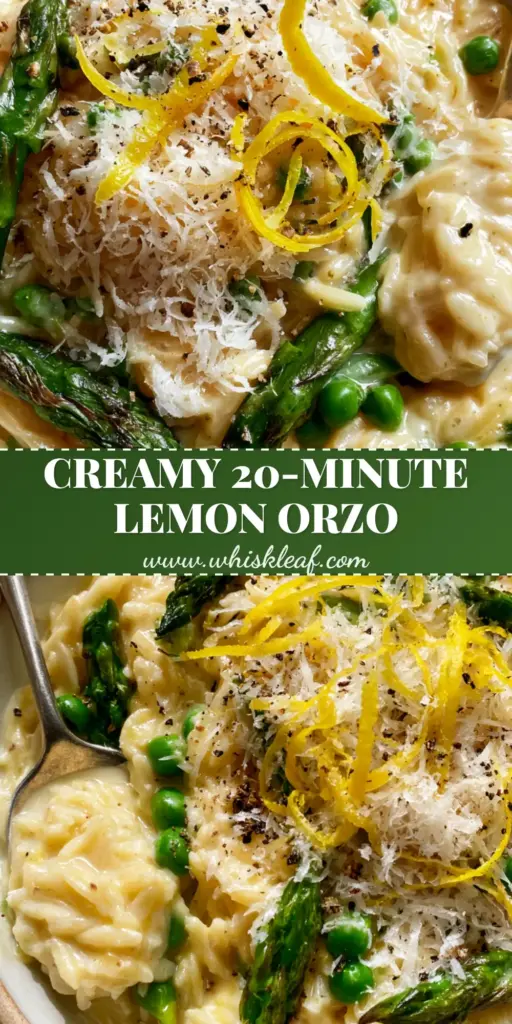
This orzo with asparagus and peas is more than a meal; it’s a celebration of seasonal freshness and culinary technique. By focusing on the “invisible” foundational steps—like searing the tips and emulsifying the sauce—you can achieve a restaurant-quality dish in the comfort of your own home.
If you enjoyed this recipe, please leave a comment below and let us know how your “spoon pull” turned out! Don’t forget to follow juliaflavor on Pinterest for more vibrant spring inspiration and share this post with your fellow home cooks.