When you imagine the ultimate Mediterranean side dish, this balsamic orzo salad is exactly what comes to mind. It is a vibrant, textural masterpiece that combines the chew of al dente pasta with the sharp tang of a syrupy glaze. Whether you are hosting a summer garden party or prepping a sophisticated weekday lunch, this dish delivers high-impact flavor with minimal effort.
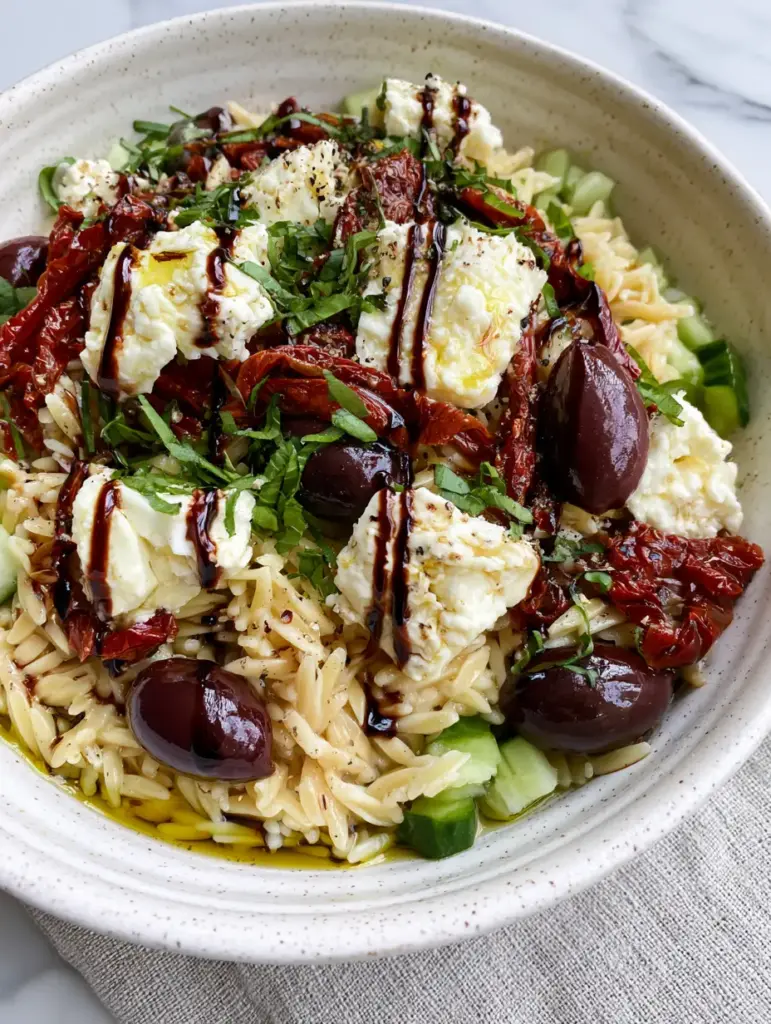
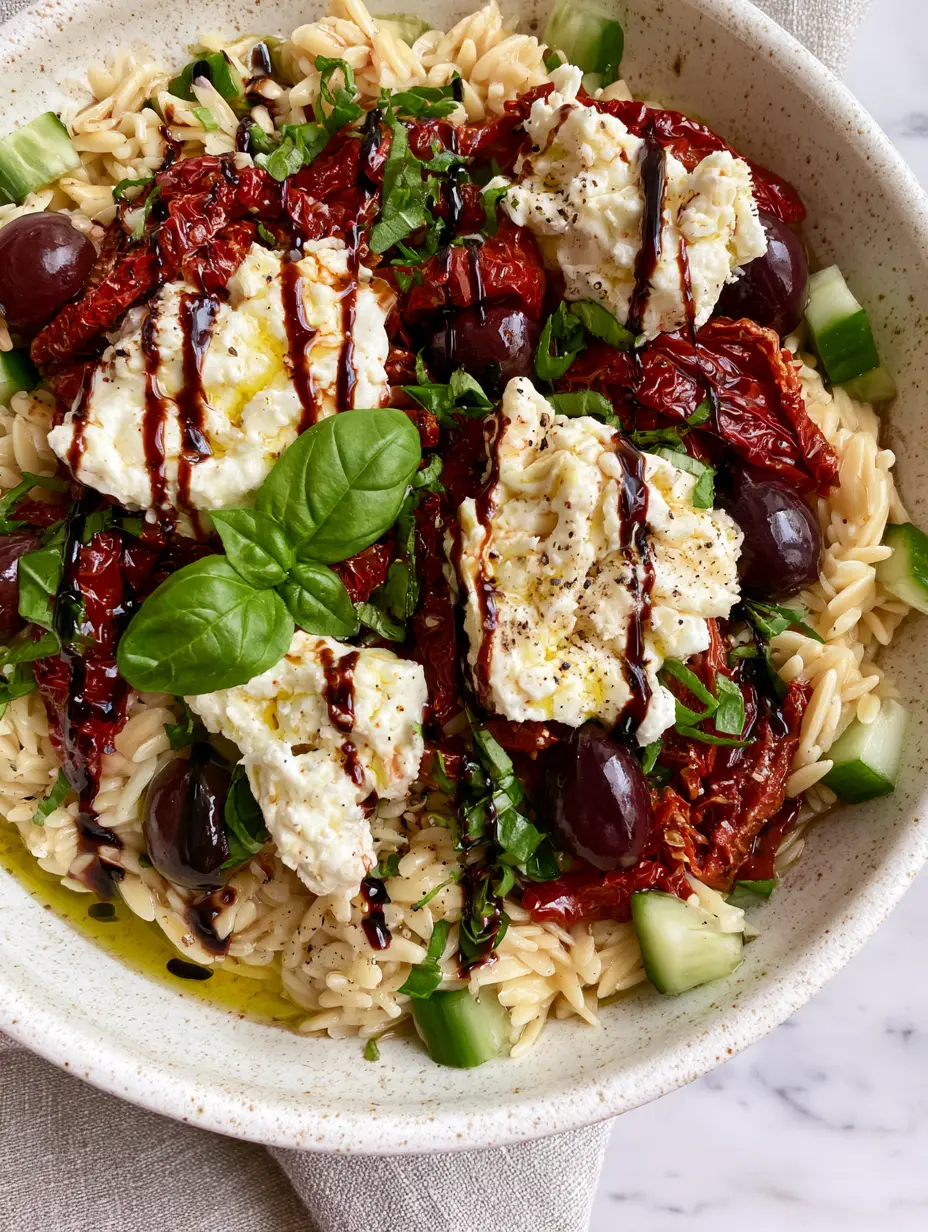
The visual appeal of this salad is undeniable. Imagine tender orzo pearls glistening under a thin coat of golden extra virgin olive oil, punctuated by the deep reds of sun-dried tomatoes and the bright green of fresh basil ribbons. It is a gourmet experience served in a single bowl, designed to be as beautiful to look at as it is delicious to eat.
By following this culinary roadmap, you will master the balance between salty, sweet, and savory. We will lean into professional techniques to ensure your pasta never gets mushy and your balsamic drizzle stays thick and distinct. This is the only balsamic orzo salad recipe you will ever need.
Why This Mediterranean Orzo Recipe Works
- Perfectly Al Dente Texture: We use precise timing to ensure each orzo “pearl” remains distinct and firm, providing a satisfying bite that holds up against the heavier ingredients.
- The Syrupy Glaze Factor: Unlike thin vinaigrettes that disappear, the thick balsamic glaze creates a striking visual contrast and a concentrated burst of acidity.
- Creamy-Salty Balance: Large, rough-crumbled blocks of feta cheese provide a rich, dairy-forward counterpoint to the briny whole kalamata olives.
- Vibrant Herbaceous Finish: Freshly chiffonaded basil leaves add a peppery, aromatic top note that lifts the entire flavor profile.
The Mediterranean Pantry Essentials for This Orzo Masterpiece
Orzo Pasta: 1 lb (454g) of high-quality semolina orzo. This rice-shaped pasta is the backbone of the dish; look for brands that promise a firm texture even after boiling.
Balsamic Glaze: 1/4 cup (60ml) of thick, syrupy reduction. While you can make your own, a high-end store-bought glaze ensures the perfect viscosity for those signature vertical drizzles.
Feta Cheese: 6 oz (170g) of high-quality sheep’s milk feta. Avoid pre-crumbled varieties; instead, buy a block and break it into large, rustic chunks to maintain that creamy mouthfeel.
Oil-Packed Sun-Dried Tomatoes: 1/2 cup (110g), sliced into thin strips. The oil from the jar is liquid gold, infused with concentrated tomato flavor, and helps coat the pasta pearls.
Kalamata Olives: 1/2 cup (75g) of whole, pitted olives. Using whole olives prevents the brine from muddying the colors of the other ingredients while providing a juicy, salty pop.
Persian Cucumbers: 2 small (approx. 200g), unpeeled and diced into crisp cubes. Their thin skin and high water content provide a necessary crunch that contrasts with the soft pasta.
Fresh Basil: 1/2 cup (15g) of loosely packed leaves. We will use the chiffonade technique to create delicate ribbons that distribute flavor evenly throughout the salad.
Extra Virgin Olive Oil: 3 tbsp (45ml). This foundational ingredient provides the “glistening” effect and acts as the bridge between the pasta and the dry seasonings.
Invisible Essentials: 1 tsp (6g) kosher salt for the pasta water and 1/2 tsp (2g) freshly cracked black pepper for the final seasoning. These are scientifically required to enhance the natural sugars in the balsamic and the fat in the feta.
Essential Tools for a Professional Finish
To achieve the “gourmet” look seen in professional food photography, you will need a few specific tools. A large pot for boiling the orzo is standard, but a fine-mesh sieve is better than a traditional colander for draining these small pasta grains.
A sharp chef’s knife is non-negotiable for achieving clean edges on your cucumber cubes and those perfect basil ribbons. Finally, choose a wide, shallow ceramic bowl—preferably off-white or speckled—to showcase the layers of the balsamic orzo salad effectively.
A Step-by-Step Guide to the Perfect Al Dente Texture
Preparing the Orzo Foundation
Bring 4 quarts (3.8L) of water to a rolling boil and season generously with kosher salt. The water should taste like the sea; this is your only chance to season the interior of the pasta pearls.
Add the 1 lb (454g) of orzo and cook for exactly 8-9 minutes. Start tasting at the 7-minute mark. You are looking for a “bite”—tender but with a firm center. Once reached, drain immediately through a fine-mesh sieve.
Instead of rinsing with water, which strips away flavor-carrying starches, spread the orzo on a large sheet pan. Drizzle with 1 tbsp (15ml) of extra virgin olive oil and toss gently. This prevents clumping while keeping the pasta glistening.
Mastering the Mediterranean Mix-ins
While the orzo cools slightly, prepare your vegetables. Dice the unpeeled Persian cucumbers into 1/4-inch (6mm) cubes. This size ensures you get a bit of crunch in every forkful without overwhelming the delicate pasta.
Slice the sun-dried tomatoes into thin strips. If they came in a jar, feel free to include a teaspoon of the packing oil for extra depth. Chiffonade the basil by stacking the leaves, rolling them tightly like a cigar, and slicing across the roll to create thin ribbons.
The Art of the Assembly
In your large ceramic bowl, combine the cooled orzo, diced cucumbers, sun-dried tomato strips, and whole kalamata olives. Add the remaining extra virgin olive oil and toss until every pearl is coated and glowing under the light.
Now, gently fold in the large feta chunks. Do not over-mix here; you want to keep the cheese in distinct blocks rather than turning the salad into a white, creamy mess. This preserves the visual “layering” described in our blueprint.
The Finishing Visual Touches
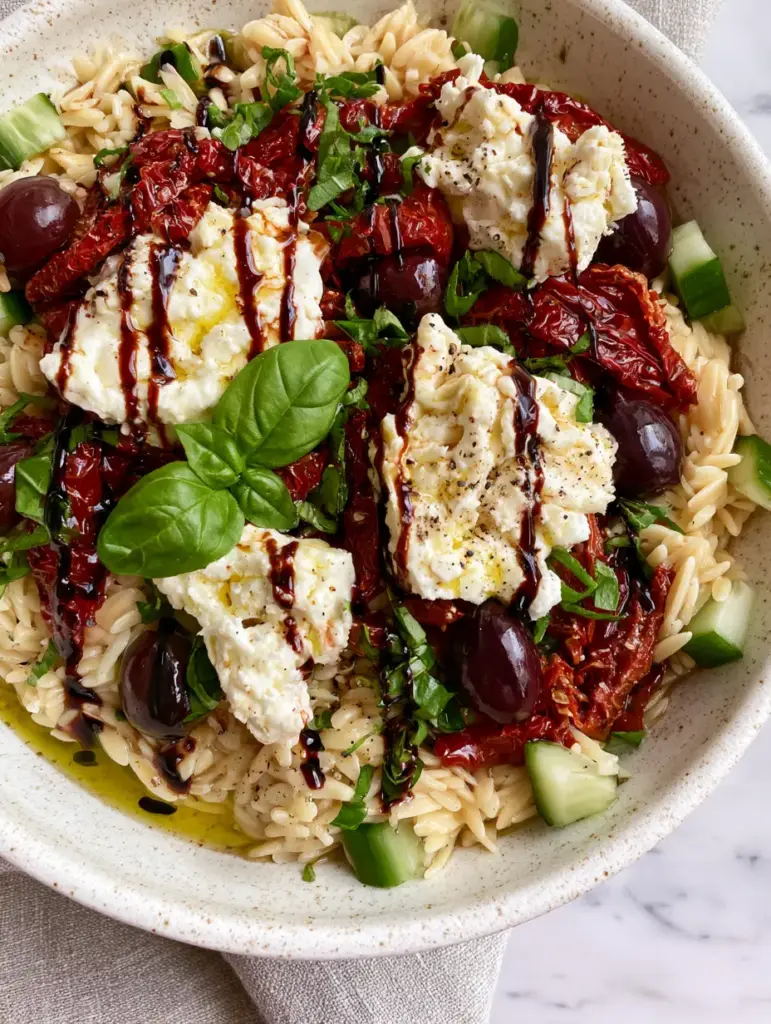
The final step is what elevates this from a simple pasta salad to a gourmet centerpiece. Take your balsamic glaze and create thick, vertical drizzles across the surface. The dark, syrupy lines should sit on top of the cheese and tomatoes.
Scatter the basil chiffonade over the top, followed by a generous dusting of freshly cracked black pepper. The aroma of the pepper hitting the glaze is the sensory cue that your dish is ready for the table.
Professional Secrets for a Non-Mushy Pasta Salad
- The Cooling Technique: Never dress hot orzo with balsamic glaze. The heat will cause the pasta to absorb the glaze, turning the dish a dull brown color instead of having those beautiful dark streaks.
- Basil Preservation: Only add the basil ribbons at the very last second. Basil oxidizes quickly when cut and will turn black if it sits in the acidic glaze for too long.
- The “Salt” Rule: Since feta and olives are naturally salty, under-salt your initial mix. Taste the assembled salad before adding any extra salt, as the flavors will intensify as it sits.
- Cucumber Selection: Use Persian or English cucumbers. Standard garden cucumbers have thick skins and large seeds that release too much moisture, which can make the salad watery.
Storage, Reheating, and Make-Ahead Advice
This balsamic orzo salad is an excellent candidate for meal prep. It stays fresh in an airtight container in the refrigerator for up to 4 days. In fact, the flavors often meld and improve after 24 hours.
If you are making this ahead of time, store the balsamic glaze and fresh basil separately. Add them just before serving to maintain the high-contrast visual appeal. This salad is intended to be served cold or at room temperature; do not attempt to reheat it, as the feta will lose its structural integrity.
What to Serve With This Gourmet Orzo Salad
This salad is hearty enough to stand alone as a vegetarian lunch, but it also shines as a side dish. For a complete Mediterranean feast, pair it with a perfectly seasoned grilled chicken to add lean protein.
If you are hosting a summer potluck, it complements other chilled dishes like a chilled cucumber and tomato salad or a vibrant mediterranean pearl couscous salad. For those who love a bit of variety in their grains, it also pairs beautifully with a bright lemon basil pasta salad.
Frequently Asked Questions
Absolutely. This salad pairs beautifully with grilled chicken, sautéed shrimp, or even canned chickpeas for a plant-based protein boost.
Yes, simply substitute the semolina orzo with your favorite gluten-free orzo brand or use a short-grain rice like Arborio for a similar texture.
The key is to toss the orzo with a tablespoon of extra virgin olive oil immediately after draining. This creates a barrier that keeps the pearls separate as they cool.
No. Balsamic vinegar is thin and acidic, while balsamic glaze is a reduction that is thick, syrupy, and much sweeter. The glaze is essential for the visual drizzles in this recipe.
Persian cucumbers have thinner skin and fewer seeds, which means they stay crunchy and won’t make the salad watery like standard garden cucumbers often do.
The Ultimate Balsamic Orzo Salad Recipe
Balsamic Orzo Salad with Creamy Feta and Sun-Dried Tomatoes
Ingredients
Equipment
Method
- Cook the orzo in salted boiling water for 8-9 minutes until al dente.
- Drain in a fine-mesh sieve and spread on a baking sheet. Toss with 1 tbsp olive oil to prevent sticking.
- In a large bowl, combine the cooled orzo with diced cucumbers, sun-dried tomato strips, and whole olives.
- Add the remaining olive oil and gently fold in the large feta chunks to avoid breaking them down too much.
- Drizzle the thick balsamic glaze vertically across the salad. Top with fresh basil ribbons and cracked black pepper.
Notes
Use Persian cucumbers for the best crunch without excess moisture.
Join Our Culinary Community!
We hope this balsamic orzo salad becomes a staple in your kitchen. Its balance of textures and gourmet presentation never fails to impress. If you enjoyed this recipe, please leave a comment below and let us know how it turned out!
Don’t forget to sign up for our newsletter for more Mediterranean-inspired recipes delivered straight to your inbox. You can also save this recipe to your favorite boards by following us on Pinterest. Happy cooking!